Bamboo viscose
Made from fast-growing bamboo grass, regenerated into a soft cellulose fibre.
- Hand-feel
- Silky, cool to the touch, fluid drape.
- Best for
- Sheets, towels, baby terry

The science of softness
Four plant-based fibres sit at the heart of our bed and bath collections. Bamboo, Tencel™ and modal are blended with, or used alongside, cotton for silky comfort and everyday durability.
Made from fast-growing bamboo grass, regenerated into a soft cellulose fibre.
Wood pulp from certified and controlled forests, spun in a closed-loop process (Lenzing).
Regenerated from beech-wood pulp into an exceptionally fine, soft fibre.
Grown without synthetic pesticides or GM seed; far lower blue-water use (LCA).
Comfort & health
Cellulosic fibres absorb and release moisture readily, helping skin feel drier through the night. Lenzing reports that Tencel™ and modal absorb notably more moisture than cotton.
Thermal comfort strongly shapes sleep quality. Breathable, moisture-managing bedding supports a comfortable sleep microclimate (Okamoto-Mizuno & Mizuno, 2012).
The American Academy of Dermatology advises soft, breathable fabrics for eczema-prone skin and avoiding rough, scratchy materials.
Raw bamboo fibre has shown antibacterial activity in studies. We position bamboo on softness and moisture handling, and let OEKO-TEX® testing speak for safety.
Standard moisture regain (% of dry weight)
Typical published figures (Morton & Hearle, Physical Properties of Textile Fibres).
Sustainability in numbers
| Fibre | Land & water | Production | End of life | Hand-feel |
|---|---|---|---|---|
| Bamboo viscose | Typically rain-fed, no irrigation | Chemical regeneration: process control matters | Biodegradable | Silky, cool to the touch, fluid drape. |
| Tencel™ lyocell | Managed forests | Closed-loop solvent recovery | Biodegradable | Smooth, cool, strong when wet. |
| Modal | Managed forests | Chemical regeneration | Biodegradable | Ultra-soft, holds colour, resists pilling. |
| Organic cotton | Far lower blue-water use (LCA) | Mechanical spinning | Biodegradable | Soft, airy. |
Sources: Guinness World Records; Lenzing; Textile Exchange, Life Cycle Assessment of Organic Cotton, 2014; WWF; Ellen MacArthur Foundation, A New Textiles Economy, 2017. LCA results vary by region and method. Tencel™ and Lenzing™ are trademarks of Lenzing AG.
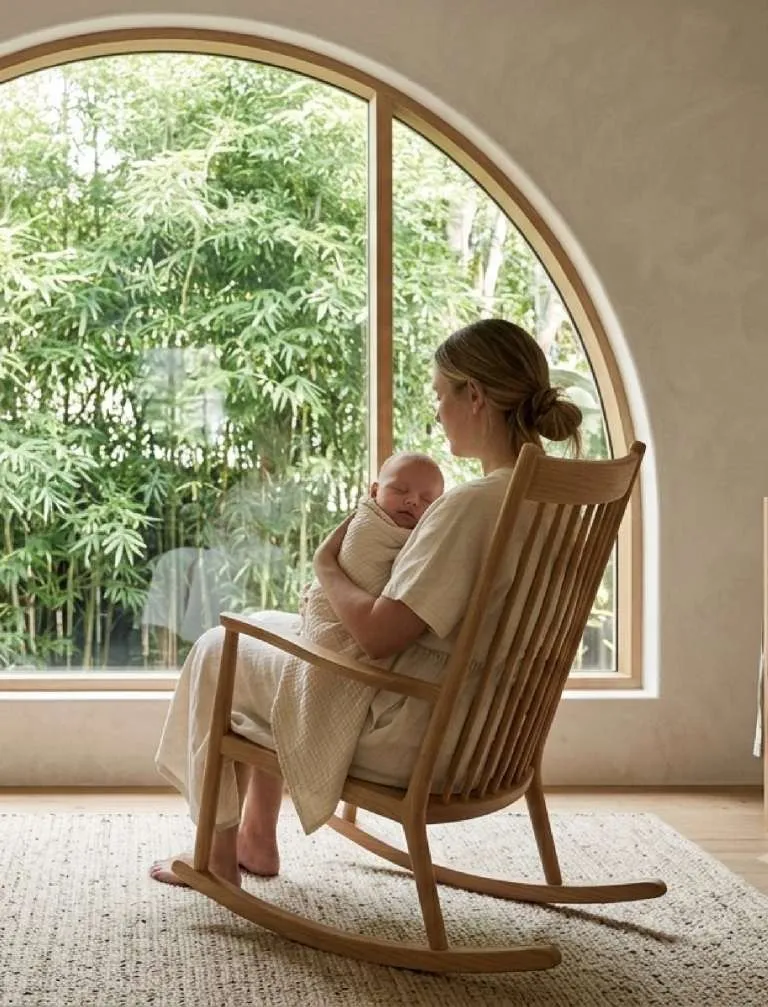
The baby range
Commonly cited at around 30% thinner than adult skin, so what touches it matters.
Stamatas et al., Pediatric Dermatology, 2011
OEKO-TEX® STANDARD 100 Product Class I covers articles for babies up to 36 months, with the tightest limits on harmful substances.
OEKO-TEX® Standard 100 criteria
Breathable fabric helps avoid overheating, a recognized safe-sleep concern. Multi-layer muslin grows softer with every wash.
AAP Safe Sleep Recommendations, 2022